

Postpartum hair loss affects the majority of new mothers. If you are finding clumps of hair on your pillow or blocking the shower drain a few months after giving birth, you are far from alone.
Up to 90 per cent of women experience some degree of hair shedding after childbirth, a temporary condition driven by the sharp hormonal shift that follows delivery.
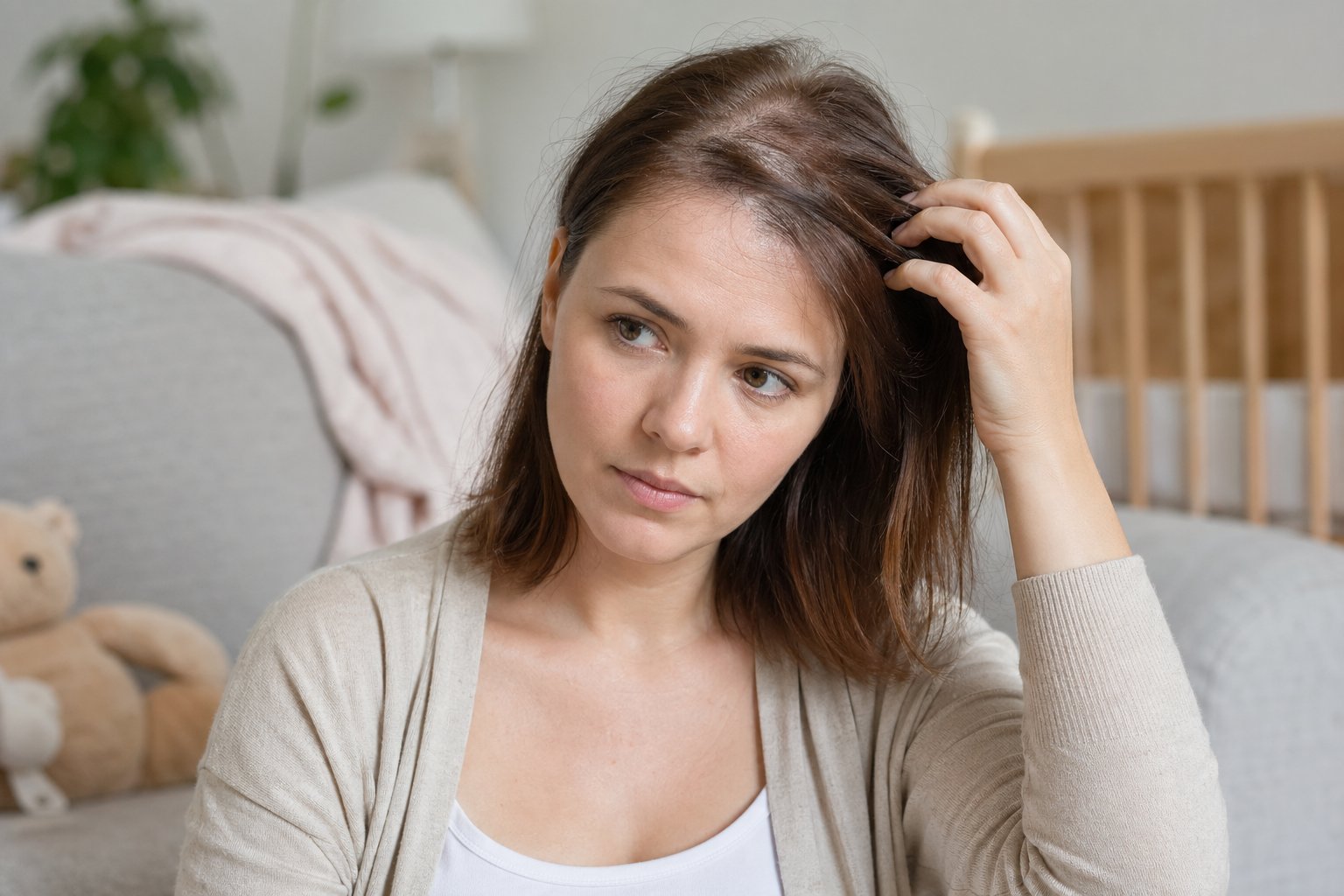
Hair loss after pregnancy can feel alarming, especially when it seems to come out of nowhere during an already demanding period. The good news is that postpartum hair shedding is almost always temporary and resolves without treatment.
Knowing the timeline, the science behind it, and the practical steps you can take puts you back in control of something that can otherwise feel unsettling. This guide walks you through exactly when hair thinning after pregnancy tends to start and stop, why it happens, what counts as normal versus a reason to see a doctor, and what you can do at home to support regrowth.
Whether you are already noticing postpartum changes or you are still pregnant and want to prepare, the information here is designed to be realistic, evidence-aligned, and easy to act on. If you are looking for planet-conscious products that support you through the postnatal period, The Green Mumma is worth a browse.
When Shedding Starts and How Long It Lasts
Most new mothers notice postpartum shedding between two and five months after delivery. There is a clear peak around three to four months.
The shedding is self-limiting. The vast majority of women see significant improvement by their baby's first birthday.
When Postpartum Hair Loss Usually Begins
You will typically start to notice extra hair fall around two to four months after giving birth. This timing lines up with the point at which oestrogen levels, which stayed elevated throughout pregnancy, have dropped back to their pre-pregnancy baseline.
For some mothers, the shedding begins closer to six weeks postpartum. For others, it does not become obvious until the five-month mark.
Both ends of that range are considered normal.
When Shedding Tends to Peak
The heaviest hair thinning after pregnancy usually happens around three to five months postpartum. This is the stage when you may notice large amounts of hair coming away in the brush, gathering at the drain, or collecting on your clothes.
It can look dramatic, but you are losing hair that would have shed gradually over the previous nine months had pregnancy hormones not delayed the process.
When Postpartum Hair Loss Usually Stops
For most women, postpartum hair shedding slows significantly between six and twelve months after delivery. By your baby's first birthday, the rate of shedding should have returned to normal.
If it continues well beyond that window, it is worth investigating further.
What Regrowth Can Look Like in the First Year
As new hairs begin to grow back, you will probably spot short, fine strands around your hairline and parting. These baby hairs can stick up or create a slightly uneven texture.
That regrowth is a positive sign that your hair growth cycle is resetting. Over time, those fine strands will thicken and blend in with the rest of your hair.
Why Hair Changes After Birth
The shift from thick, glossy pregnancy hair to postpartum shedding is governed by your hormones and the natural hair growth cycle. Elevated oestrogen keeps hair in its growing phase for longer during pregnancy, and the drop after birth triggers a mass release of those retained strands.
How Pregnancy Hair Differs From Your Usual Hair Pattern
During pregnancy, rising oestrogen levels slow the rate at which hair moves from its active growing phase into shedding. The result is that fewer hairs fall out each day, which is why many women notice their hair feeling thicker and fuller from the second trimester onward.
That pregnancy hair is not new growth; it is existing hair that has simply stayed on your head longer than it normally would. Once hormone levels change after delivery, those retained hairs are released.
The Hair Growth Cycle Explained
Every strand on your head follows a three-phase cycle:
- Anagen phase (growth): Lasts two to seven years. About 85 to 90 per cent of your hair is in this phase at any given time.
- Catagen phase (transition): A short phase lasting roughly two to three weeks where the follicle shrinks.
- Telogen phase (rest and shedding): Lasts around three months. The hair rests, then falls out to make room for a new strand.
Normally, only about 5 to 10 per cent of your hair is in the telogen phase at once. After childbirth, that figure can jump significantly.
Why Postpartum Telogen Effluvium Happens
Postpartum telogen effluvium is the medical term for the wave of shedding that follows delivery. When oestrogen drops sharply, a large number of hairs shift from the anagen phase into the telogen phase simultaneously, as noted by the Cleveland Clinic.
Because the telogen phase lasts about three months, you see the resulting hair fall roughly two to four months after birth. Physical and emotional stress, sleep deprivation, and nutritional demands of breastfeeding can all contribute to the intensity of the shedding, but the hormonal shift is the primary driver.
What Is Normal and What Is Not
Knowing the difference between typical post-birth shedding and something that warrants medical attention can save you unnecessary worry. It can also prompt you to seek help when it is needed.
Common Signs of Typical Post-Birth Shedding
Normal postpartum shedding tends to look like this:
- Extra hair on your brush, pillow, or in the shower drain
- A general thinning across the scalp rather than in one specific area
- Noticeable hair loss starting between two and five months after delivery
- Gradual improvement by six to twelve months postpartum
The average person sheds around 100 hairs per day under normal circumstances. During postpartum shedding, that number can increase substantially, which is why it looks so dramatic.
When Hair Thinning May Point to Another Cause
Not all hair loss after childbirth is down to hormones. You should consider other causes if:
- Shedding continues without improvement beyond 12 months
- You notice bald patches rather than diffuse thinning
- Your hair was already thinning before or during pregnancy
- You have other symptoms such as fatigue, weight changes, or mood shifts that could suggest a thyroid or iron-related condition
How to Tell Diffuse Shedding From Bald Patches
Postpartum hair shedding is typically diffuse, meaning it affects the entire scalp evenly. You may notice your ponytail feels thinner or your parting looks wider, but the thinning is spread out.
Bald patches, where you can see distinct areas of bare scalp, are not a characteristic of standard postpartum telogen effluvium. Patchy loss could point to alopecia areata or another condition and should be assessed by a GP or dermatologist.
What You Can Do at Home

You cannot fully prevent postpartum hair loss because it is driven by hormonal changes. You can reduce unnecessary breakage, support a healthy scalp environment, and give your body the nutrients it needs for regrowth.
Gentle Styling to Reduce Breakage
Hair that is already in the process of shedding is more fragile. A few practical adjustments make a noticeable difference:
- Use a wide-toothed comb or a detangling brush on wet hair
- Pat hair dry with a soft towel rather than rubbing
- Limit heat tools such as straighteners and curling irons
- Choose a volumising shampoo that does not weigh hair down
Why Avoiding Tight Hairstyles Matters
Tight ponytails, braids, and buns put tension on hair follicles, which can worsen breakage and even lead to traction alopecia over time. Loose styles, soft scrunchies, and claw clips are kinder to fragile postpartum hair.
If you need hair out of your face for feeds and nappy changes, a low, loose bun is a practical option.
Scalp Care and Scalp Massage
A healthy scalp supports healthy regrowth. Regular scalp massage with your fingertips improves blood flow to the follicles and feels good after a long day with a newborn.
You can do it dry or with a lightweight oil like jojoba or argan. Avoid products with harsh sulphates that can dry out the scalp.
Gentle, planet-conscious options, like those offered by brands such as The Green Mumma, can help you look after both your hair and the environment.
Nutrition and Everyday Habits That Support Regrowth
Your body needs adequate protein, iron, zinc, and vitamins A, C, D, and E to build strong hair. Prioritising a nutrient-rich diet that includes lean protein, leafy greens, eggs, nuts, and oily fish gives your hair the building blocks it needs.
If you are breastfeeding, your nutritional demands are higher. A postnatal multivitamin can help fill gaps, but speak to your GP or midwife before starting any new supplement.
When to Speak to a Healthcare Professional
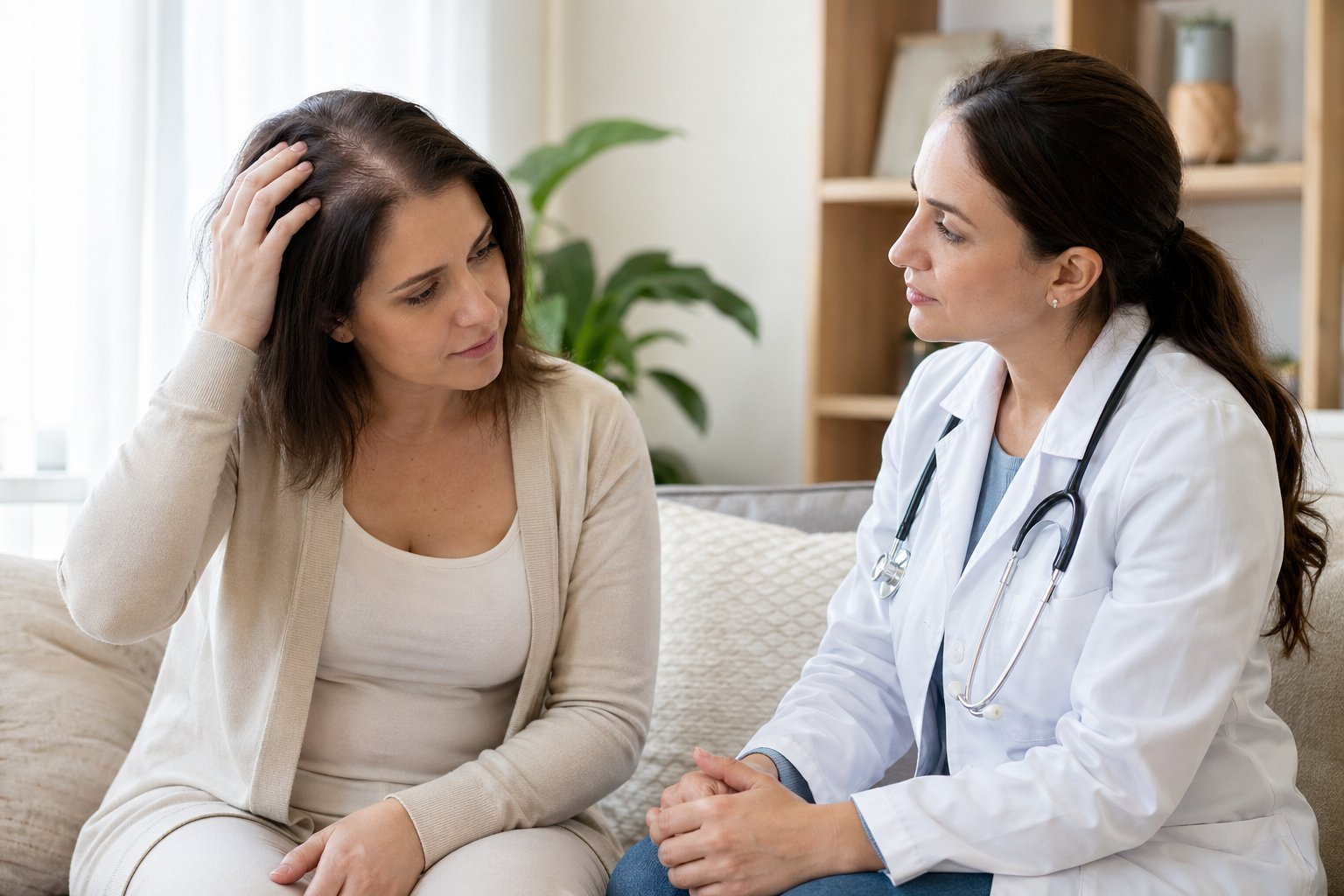
Most postpartum hair loss resolves on its own. There are clear signals that it is time to get professional input.
Signs It Is Worth Seeing a GP or Dermatologist
Book an appointment if you experience any of the following:
- Hair loss that has not improved by 12 months postpartum
- Distinct bald patches on the scalp
- Excessive shedding that feels disproportionate to what is described as typical
- Scalp redness, itching, or soreness alongside hair loss
- Additional symptoms such as extreme tiredness, unexplained weight gain or loss, or heart palpitations
Possible Checks for Iron, Thyroid and Other Factors
Your GP will likely start with blood tests to rule out common causes. Key tests include:
| Test | What It Checks |
|---|---|
| Ferritin / full blood count | Iron stores and anaemia |
| Thyroid function (TSH, T4) | Underactive or overactive thyroid |
| Vitamin D | Deficiency, which is common in the UK |
| B12 and folate | Nutritional shortfalls |
Postpartum thyroid issues affect around 5 to 10 per cent of women and can mimic or worsen postpartum telogen effluvium. A simple blood test can identify this.
Questions to Ask if Shedding Feels Severe or Prolonged
Going to a GP appointment prepared helps you get the most from the consultation. Consider asking:
- Could my hair loss be linked to a thyroid or iron issue?
- Should I be referred to a dermatologist?
- Are any of my current medications contributing to shedding?
- Is there a specific supplement you recommend given my blood results?
Writing your questions down before the appointment helps. This is especially useful when you are sleep-deprived and juggling a baby.
Coping With the Emotional Side of Hair Changes
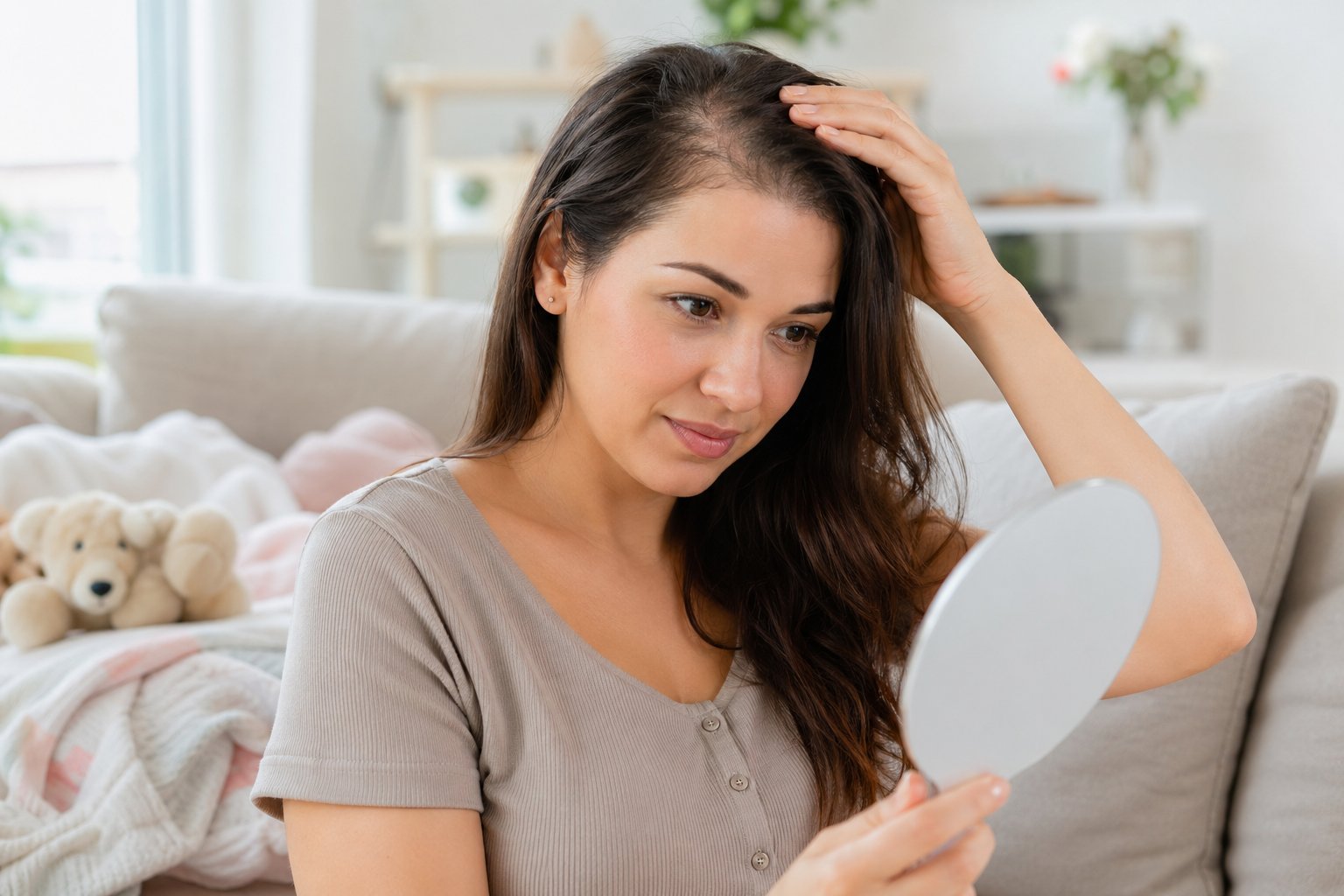
Postpartum hair loss is physically harmless, but its emotional impact can be significant. Dermatology experts note that the cosmetic impact of acute postpartum shedding can cause substantial distress, and it is important to acknowledge that rather than dismiss it.
Why Post-Birth Shedding Can Feel So Distressing
Your body has already gone through enormous postpartum changes. Adjusting to a new shape, healing from birth, and dealing with sleep deprivation is a lot.
Watching your hair thin on top of everything else can feel like one more thing you have lost control over. It is also common for hair to be closely linked to identity and confidence.
Feeling upset about hair loss does not make you vain; it makes you human.
Practical Ways to Manage Expectations and Confidence
- Remind yourself of the timeline. Knowing that shedding typically peaks around three to four months and eases by 12 months helps frame it as a finite phase.
- Try a fresh cut. A shorter style or added layers can create the appearance of more volume and make shedding less noticeable.
- Focus on what you can control. Gentle styling, good nutrition, and scalp care give you constructive daily actions.
- Talk about it. Speaking to other mothers who have been through the same experience can be genuinely reassuring. Online communities, NCT groups, and postnatal classes are all good places to start.
How Partners and Support People Can Help
If your partner or a family member is reading this, here is what helps.
Acknowledge that hair loss is real, it matters to her, and it is not trivial.
Avoid phrases like "it'll grow back" without first recognising how she feels.
Practical support, such as picking up a gentle shampoo, making time for her to look after herself, or simply listening, goes further than you might expect.
#YouveGotThisMumma
Leave a comment