

Postpartum body changes begin the moment your baby is born. The speed and scale of what happens in those first 12 weeks can catch you off guard.
Your uterus starts shrinking, your hormones shift dramatically, and your body begins repairing tissue. It also regulates blood volume and adjusts to life outside of pregnancy.
This period, often called the fourth trimester, is as physically demanding as any stage of pregnancy itself.

Whether you gave birth vaginally or by caesarean, you will experience bleeding, breast changes, pelvic floor adjustments, abdominal recovery, and emotional shifts. Each of these follows a rough timeline, but no two recoveries are identical.
This guide walks you through the key postpartum body changes week by week across the first 12 weeks. It covers what to expect physically and emotionally, practical comfort measures you can use straight away, and clear guidance on when a symptom crosses from normal into something that needs urgent attention.
What To Expect In The Fourth Trimester
The fourth trimester spans the first 12 weeks after delivery. It is a time of rapid physical change, hormonal recalibration, and emotional adjustment.
Recovery looks different depending on your birth experience. However, the broad pattern of uterine shrinkage, bleeding, breast changes, and pelvic floor healing applies to nearly everyone.
How Recovery Timelines Differ In The First Hours, Days And Weeks
In the first 24 hours, your body releases a surge of oxytocin that triggers uterine contractions and helps slow bleeding. Blood volume starts to drop, and you may shake, sweat, or feel intensely cold as your circulatory system adjusts.
These reactions are normal and usually settle within a few hours.
During the first week, lochia is at its heaviest, afterpains peak (especially if you are breastfeeding), and breast milk begins to come in around day three or four. By weeks two to six, bleeding tapers, perineal soreness eases, and your uterus gradually returns to its pre-pregnancy size.
According to Pampers UK, the uterus typically reaches its original size within about six weeks. Your belly may take longer to feel familiar.
Weeks six to twelve bring continued hormonal shifts, possible hair shedding, and slower but ongoing changes to your core, pelvic floor, and breast tissue.
Why The Body Still Looks And Feels Different After Birth
Your postpartum body will not snap back to its pre-pregnancy state immediately. Stretched abdominal muscles, extra fluid, and residual pregnancy weight all contribute to a belly that still looks several months pregnant in those first weeks.
This is completely expected.
Hormonal changes also affect skin elasticity, joint looseness, and temperature regulation. Night sweats are common as your body sheds the extra fluid it retained during pregnancy.
As noted in a comprehensive physiological guide, the postpartum period involves the gradual reversal of nearly every system that adapted to support pregnancy.
What Changes After Vaginal Birth And C-Section Birth
After a vaginal birth, perineal soreness, swelling, and possible stitches from tears or an episiotomy are the most immediate concerns. Sitting, walking, and going to the toilet can be uncomfortable for the first week or two.
After a caesarean, recovery centres on the surgical incision. You will have restricted mobility, and lifting anything heavier than your baby is usually advised against for several weeks.
Your c-section scar needs careful monitoring for signs of infection such as redness, oozing, or increasing pain.
Both birth types involve lochia, afterpains, breast changes, and hormonal shifts. The key difference is the additional surgical healing required after a caesarean, which typically extends the initial recovery window.
Bleeding, Discharge And Uterine Recovery
Vaginal bleeding after birth is one of the most noticeable postpartum body changes. It follows a predictable pattern from heavy red flow to lighter discharge over several weeks.
Alongside this, your uterus contracts back to its pre-pregnancy size through a process called involution.
Lochia And Normal Vaginal Discharge After Birth
Lochia is the vaginal discharge that follows birth, regardless of whether you delivered vaginally or by caesarean. According to the MSD Manual, it progresses through three stages:
- Lochia rubra (days 1 to 3-4): bright red, heavy bleeding
- Lochia serosa (days 4 to around 14): pale brown or pinkish discharge
- Lochia alba (from around day 14 onwards): yellowish-white discharge
You will need super-absorbent maternity pads during the early days. The NHS advises against using tampons until after your six-week postnatal check, as there is still a wound at the placental site that needs to heal.
Lochia can last anywhere from two to six weeks. You may notice heavier flow after activity or during breastfeeding, both of which are normal.
Afterpains, Uterine Contractions And Breastfeeding
Afterpains are cramping sensations caused by your uterus contracting back to its original size. They feel similar to period pains and can range from mild to quite intense, particularly if this is not your first baby.
Breastfeeding triggers the release of oxytocin, which increases the strength of these contractions. That means you may feel stronger cramps while nursing.
Afterpains are usually strongest in the first two to three days and ease significantly within a week. Over-the-counter pain relief is usually appropriate, but check with your midwife or pharmacist if you are breastfeeding.
When Heavy Bleeding May Signal Postpartum Haemorrhage
Most postpartum bleeding follows a steady decline. If it doesn't, or if it suddenly becomes much heavier, this could be a sign of postpartum haemorrhage (PPH).
According to the NCT, PPH is one of the most serious complications after birth and requires prompt medical attention.
Contact your midwife or attend A&E immediately if you experience:
- Soaking through more than one maternity pad per hour
- Passing blood clots larger than a 50p coin
- Sudden heavy bleeding after discharge had been easing
- Feeling dizzy, faint, or experiencing a rapid heartbeat
PPH can occur within the first 24 hours (primary PPH) or up to 12 weeks after birth (secondary PPH). Trust your instincts. If the bleeding feels wrong, seek help without delay.
Pelvic Floor, Perineal Healing And Toileting Changes
Your pelvic floor supports your bladder, uterus, and bowel. It takes a significant load during pregnancy and birth.
Over 85 per cent of women experience some degree of perineal trauma during vaginal delivery, so discomfort, weakness, and toileting difficulties in the early weeks are extremely common.
Perineal Pain, Stitches And Comfort Measures
If you had a tear or episiotomy, the perineal area will be sore, swollen, and possibly bruised. Stitches typically dissolve on their own as the wound heals, though this can take a few weeks.
Practical comfort measures that make a real difference:
- Sitz bath: sitting in a shallow bath of warm water for 10 to 15 minutes can ease swelling and promote healing
- Peri bottle: squirting warm water over the perineum while urinating helps dilute stinging
- Witch hazel pads: placing chilled witch hazel pads against the area provides soothing relief
- Cold perineal packs: as Cambridge University Hospitals recommend, applying cold packs for 10 to 15 minutes reduces swelling
Keep the area clean by bathing daily with plain warm water, and pat dry gently. Tell your midwife if you notice an unpleasant smell, increasing redness, or worsening pain, as these may indicate infection.
Pelvic Floor Exercises, Kegel Exercises And Core Support
Starting gentle pelvic floor exercises within the first day or two after birth is recommended by Bedfordshire Hospitals NHS Trust, provided you don't have a catheter in place.
Kegel exercises involve squeezing and lifting the muscles you would use to stop the flow of urine. Try holding for a few seconds, then releasing.
Aim for sets of 10, three times a day, gradually increasing the hold time as strength improves. These exercises help restore tone, improve circulation to the healing area, and reduce the risk of longer-term pelvic floor problems.
If you had a caesarean, pelvic floor exercises are still important because pregnancy itself stretches and weakens these muscles.
Core recovery, including work on diastasis recti (the separation of the abdominal muscles), should be approached gently. Avoid sit-ups or crunches in the early weeks and focus on deep breathing and pelvic tilts instead.
Stress Incontinence, Bowel Changes And When To Get Help
Leaking urine when you cough, sneeze, or laugh is called stress incontinence, and it is very common after birth. For most women, consistent pelvic floor exercises resolve this within a few months.
Bowel movements can be daunting in the early days, especially with stitches. Eating plenty of fibre, drinking water, and avoiding straining all help.
It is very unlikely that a bowel movement will open a repaired tear. Holding a clean pad of tissue against your perineum while going can offer reassurance.
Speak to your GP or midwife if:
- Pelvic floor exercises are not improving leakage after several weeks
- You are leaking stool or struggling with bowel control
- You experience persistent pelvic heaviness or dragging sensations
Your postnatal check at six to eight weeks is a good time to raise any of these concerns. A referral to a women's health physiotherapist can make a significant difference.
Breast Changes, Feeding And Lactation Support

Your breasts go through a rapid transformation in the first weeks after birth, whether you choose to breastfeed or not. Hormonal shifts drive milk production, and the changes in size, sensitivity, and texture can feel dramatic.
Colostrum, Milk Coming In And Early Lactation
In the first two to three days after birth, your breasts produce colostrum, a thick, yellowish liquid rich in antibodies. Your baby only needs small amounts at this stage.
Around day three or four, your milk "comes in." Once you pass the placenta, your body starts producing prolactin, the hormone that kickstarts fuller milk production.
Your breasts may suddenly feel much larger, firmer, and warmer. This transition can be intense.
Frequent feeding or expressing helps your body regulate supply and eases discomfort.
Breast Engorgement, Leakage And Sore Breasts
Breast engorgement happens when your breasts become overly full of milk. They can feel tight, hard, and genuinely painful.
Wearing a supportive nursing bra, applying cool compresses between feeds, and feeding frequently all help to relieve engorgement.
Leaking between feeds is common, especially in the early weeks. Breast pads (reusable or disposable) worn inside your bra keep things manageable.
Sore, cracked, or tender nipples are another frequent challenge. Checking your baby's latch is the single most effective step.
Tommy's notes that while breastfeeding is natural, many parents need support to get it established comfortably.
Mastitis And When To Speak To A Lactation Consultant
Mastitis is an infection of the breast tissue that causes redness, warmth, swelling, and flu-like symptoms including fever and body aches. It usually develops when a blocked duct is not cleared promptly.
Seek medical advice quickly if you notice:
- A hard, red, or hot area on your breast
- A temperature of 38°C or above
- Feeling generally unwell alongside breast symptoms
Your GP can prescribe antibiotics if needed. A lactation consultant can also help you adjust positioning and latch to prevent recurrence.
If breastfeeding feels consistently painful or your baby does not seem to be feeding well, getting early professional support can prevent problems from escalating.
Abdominal Recovery, Swelling And The Postpartum Body
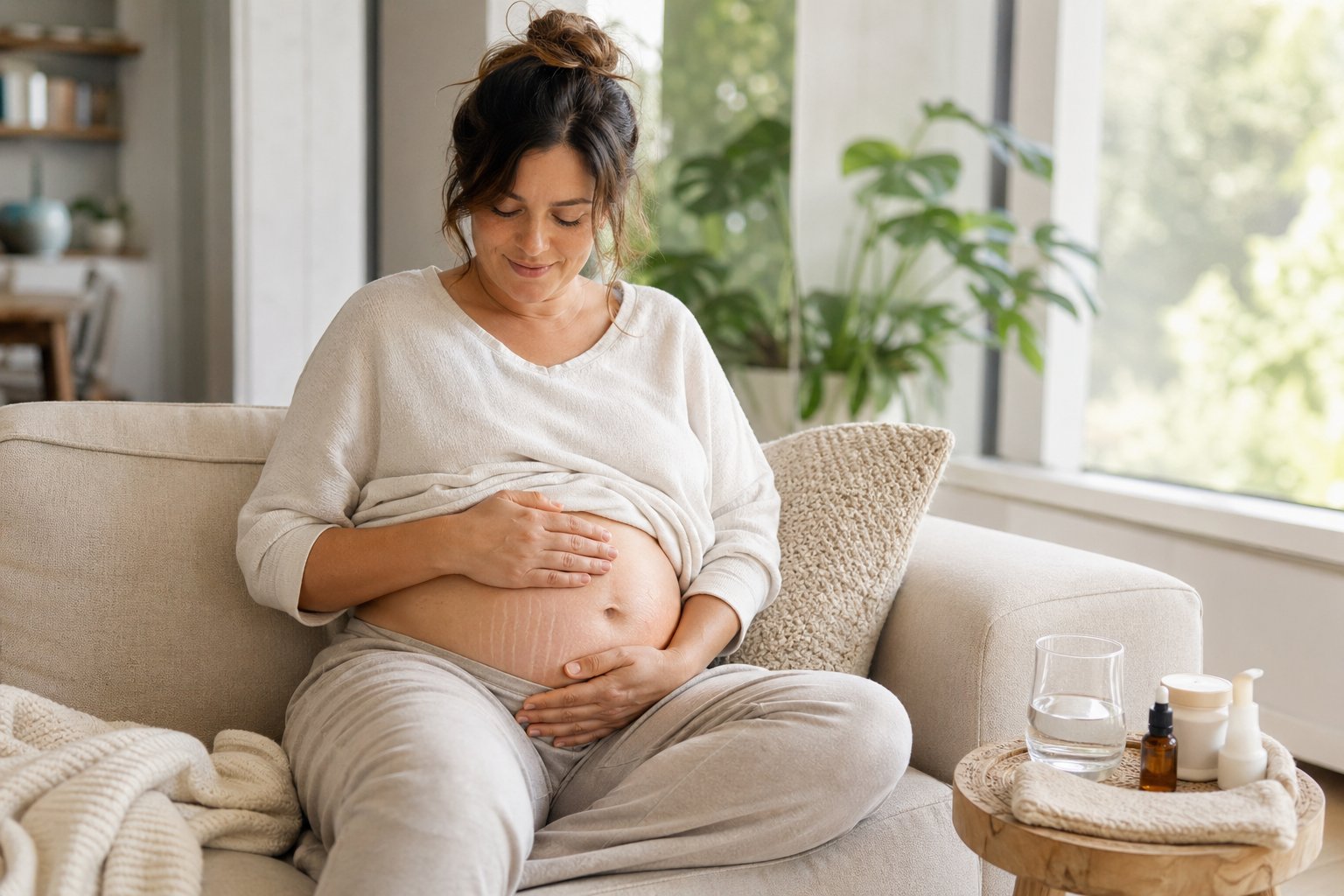
Your postpartum body continues to change throughout the 12-week fourth trimester. The abdominal area is one of the most visible sites of that ongoing recovery.
Between muscle separation, surgical healing, and fluid shifts, there is a lot happening beneath the surface.
Belly Changes, Diastasis Recti And Core Recovery
After delivery, your tummy will likely still look pregnant. This is normal.
Your uterus needs approximately six weeks to shrink back, and the stretched abdominal muscles take longer still.
Diastasis recti, the separation of the two sides of the rectus abdominis muscle along the midline, affects a significant number of postnatal women. You may notice a ridge or dome shape along the centre of your belly when you sit up or strain.
Gentle exercises such as pelvic tilts, deep abdominal breathing, and heel slides are safer starting points than traditional core work.
A postpartum pelvic floor physiotherapist can assess the degree of separation and guide you through a safe rehabilitation programme.
Most women see improvement with consistent, targeted exercise. Recovery can take several months.
C-Section Scar Healing And Mobility
If you had a caesarean, your c-section scar will be tender, numb, and possibly itchy as it heals. The external wound typically closes within two to three weeks, but the deeper tissue layers continue to repair for much longer.
In the first few weeks:
- Avoid lifting anything heavier than your baby
- Support your abdomen when coughing, laughing, or standing up
- Keep the scar clean and dry; watch for signs of infection (increased redness, swelling, oozing, or heat)
From around six weeks onwards, gentle scar massage can help break down adhesions and improve mobility. Your postnatal check is a good opportunity to discuss when to begin.
Fluid Retention, Night Sweats And General Aches
Your body retained extra fluid during pregnancy, and it needs to get rid of it afterwards. Night sweats are one of the most common ways this happens, particularly in the first two weeks.
You may wake drenched, even in a cool room. Swollen hands, feet, and ankles can persist for the first week or two as well.
Staying hydrated (which sounds counterintuitive) actually helps your body release excess fluid more efficiently.
Joint aches and general soreness are also common as the hormone relaxin, which loosened your ligaments during pregnancy, gradually leaves your system. These aches typically improve over the first few months.
Emotional Changes And Medical Red Flags

The postpartum period affects far more than your physical body. Hormonal shifts, sleep deprivation, and the sheer intensity of caring for a newborn all influence your emotional wellbeing.
Knowing the difference between common mood changes and something more serious helps you act quickly if you need support.
Baby Blues Versus Postnatal Depression
The baby blues affect up to 80 per cent of new mothers and typically appear around day three to five, coinciding with the major hormonal drop after birth. Symptoms include tearfulness, irritability, mood swings, and feeling overwhelmed.
They usually pass within two weeks. Postnatal depression is different.
It lasts longer, feels more persistent, and interferes with your ability to function or bond with your baby.
Signs include:
- Persistent low mood lasting more than two weeks
- Loss of interest in things you normally enjoy
- Difficulty bonding with your baby
- Feelings of guilt, worthlessness, or hopelessness
- Changes in appetite or sleep beyond what is expected with a newborn
If these feelings do not lift, speak to your GP, midwife, or health visitor.
The Maternal Mental Health Alliance offers a useful symptom checker that can help you identify what you are experiencing.
Postpartum Anxiety, Sleep Deprivation And Mental Load
Postpartum anxiety is less talked about than depression but just as real. Constant worry, racing thoughts, difficulty relaxing even when your baby is settled, and physical symptoms like a tight chest or nausea can all point to anxiety that goes beyond normal new-parent concern.
Sleep deprivation compounds everything. Even short stretches of uninterrupted sleep can make a measurable difference to mood and coping.
Accepting help, sleeping when the baby sleeps (where possible), and sharing night feeds if you can are all practical strategies.
The mental load of tracking feeds, nappies, appointments, and your own recovery is significant. It is not a sign of weakness to feel stretched thin by it.
Symptoms That Need Urgent Medical Attention
Some postpartum symptoms are emergencies. Trust your instincts and seek immediate help if you experience any of the following:
| Symptom | Possible cause |
|---|---|
| Sudden or very heavy vaginal bleeding, feeling faint | Postpartum haemorrhage |
| Pain, swelling, or redness in one calf | Deep vein thrombosis (DVT) |
| Chest pain or difficulty breathing | Pulmonary embolism |
| High temperature with a sore, tender abdomen | Infection |
| Severe headache, vision changes, or vomiting | Pre-eclampsia |
| Thoughts of harming yourself or your baby | Postpartum mental health crisis |
These symptoms require same-day medical assessment. Call 999 or go to A&E if you are in immediate danger.
For less acute concerns, your midwife, health visitor, or GP should be your first point of contact.
Leave a comment